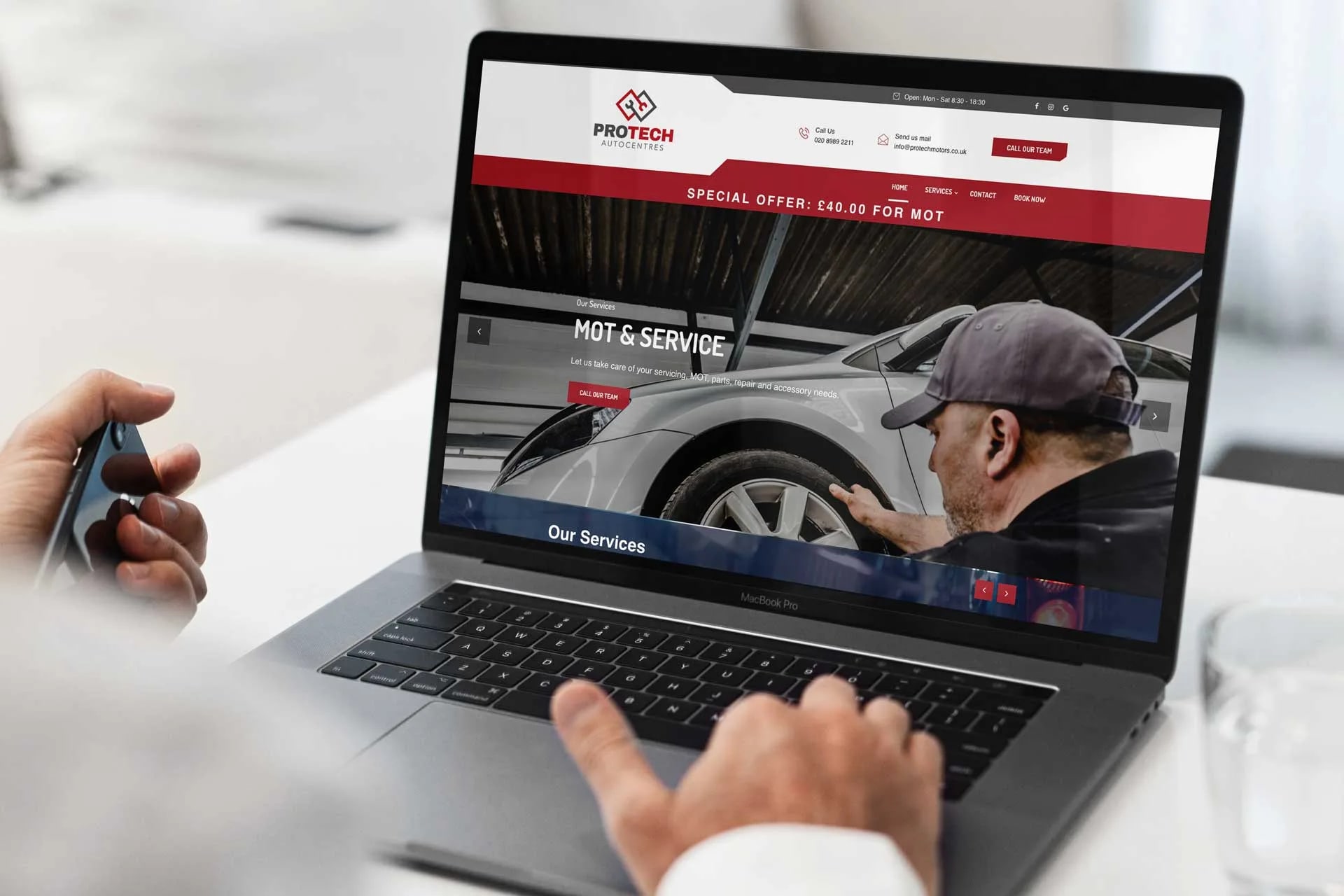
In today’s digital-first world, your garage’s website isn’t just a virtual business card—it’s the frontline for attracting and converting customers, and we give you Garage Web Design Mistakes that will help your business. However, many auto repair shops in the UK fall victim to common garage website design mistakes that silently sabotage their online presence.
According to research, a poorly designed website can lead to bounce rates as high as 88%, meaning potential customers leave before even considering a booking. For garages, this translates to lost revenue from services like MOTs, repairs, and maintenance.
This blog explores the top 10 garage web design mistakes, presented as an actionable audit checklist with corresponding fixes. We’ll focus on auto website errors UK garages often overlook, drawing from industry insights and real-world data. Additionally, we’ll highlight how investing in a professional redesign—like through RevUp, our specialised garage website optimisation service—can yield a remarkable ROI, often boosting conversions by 20-47%. Let’s get started and turn your site into a booking machine.
10 Garage Web Design Mistakes
Mistake 1: Ignoring Mobile Responsiveness
First and foremost, one of the most prevalent mistakes in garage web design is failing to optimise for mobile users. In the UK, over 70% of web traffic comes from smartphones, yet many garage sites still load poorly on smaller screens. This results in distorted layouts, small text, and frustrating navigation, causing visitors to abandon the page quickly.
The impact? High bounce rates directly kill bookings. For instance, if a driver searches for “emergency brake repair near me” on their phone and your site doesn’t adapt, they’ll head to a competitor’s mobile-friendly page instead.
Audit Checklist:
- Test your site on multiple devices using tools like Google’s Mobile-Friendly Test.
- Check if images resize properly and buttons are tappable.
- Measure page load speed on mobile—aim for under 3 seconds.
Fixes:
To remedy this, implement responsive design frameworks, such as Bootstrap. Moreover, prioritise mobile-first development, ensuring core elements like booking forms load seamlessly. With RevUp, our redesigns incorporate adaptive layouts that have helped UK garages increase mobile bookings by up to 35%, delivering a quick ROI through higher conversion rates.

Mistake 2: Slow Loading Times
Another critical issue among auto website errors in the UK is sluggish page speeds. Websites that take longer than three seconds to load lose approximately 40% of their visitors, according to Google data. For garages, this means missed opportunities when customers are urgently seeking services, such as tyre replacements.
Slow sites often stem from oversized images, excessive plugins, or poor hosting. Consequently, potential clients grow impatient and bounce, reducing your booking funnel.
Audit Checklist:
- Use PageSpeed Insights to score your site’s performance.
- Identify heavy files or scripts via browser developer tools.
- Monitor the average load time across all pages, particularly the homepage and services section.
Fixes:
Optimise images with compression tools like TinyPNG, minify CSS/JS files, and upgrade to faster UK-based hosting. Furthermore, enable browser caching. RevUp’s redesign process tackles this head-on, with clients reporting a 50% speed improvement, leading to a 25% uplift in bookings and a solid ROI within months.
Mistake 3: Cluttered or Confusing Navigation
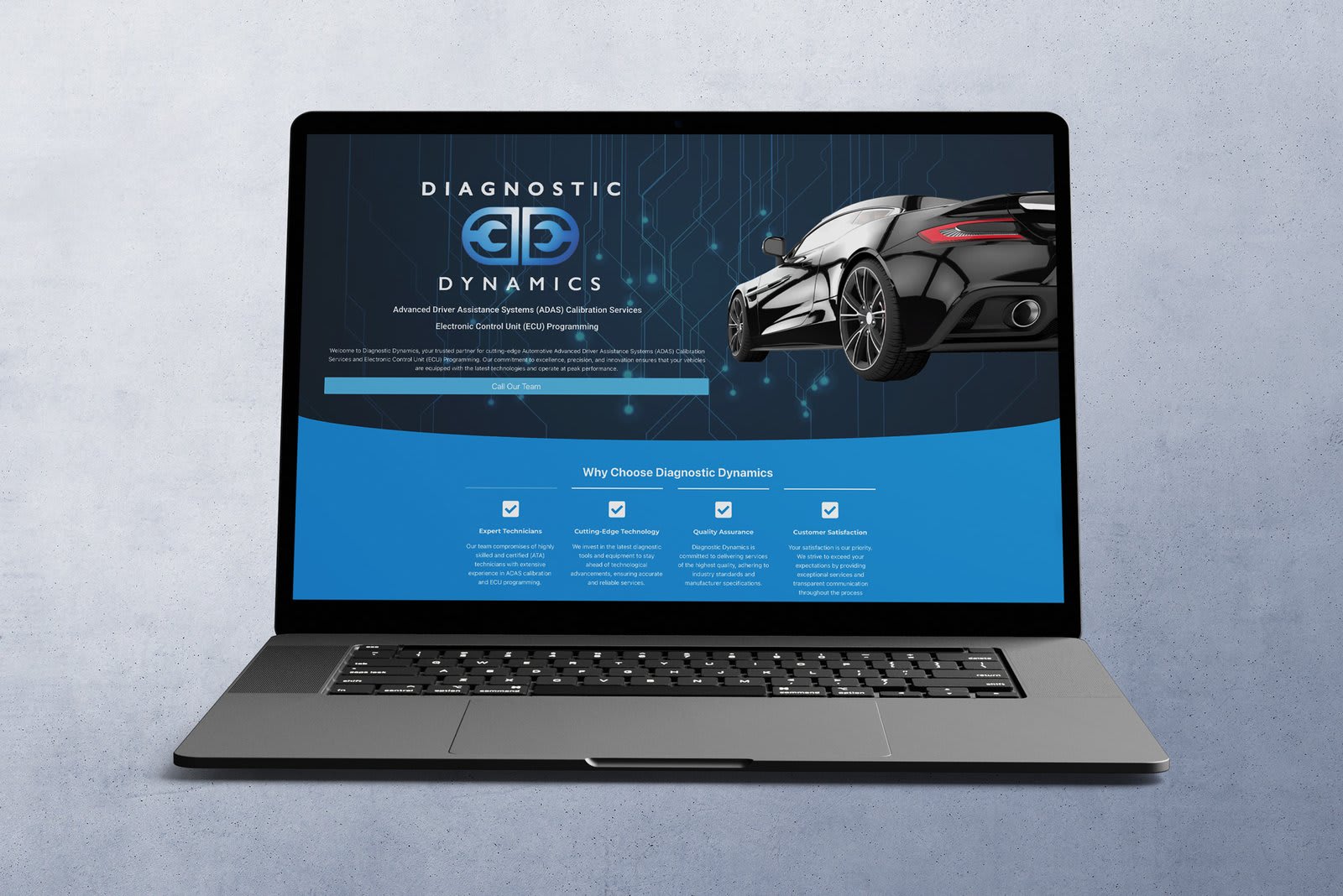
Poor navigation is a subtle yet significant web design mistake in garage design that frustrates users. If visitors can’t easily find your services, contact info, or booking portal, they’ll leave. In fact, studies show that confusing menus contribute to 70% of site abandonments.
For UK auto shops, this might mean burying MOT booking links under irrelevant subpages, leading to lost local traffic from searches like “garage services Manchester.”
Audit Checklist:
- Map out your site’s menu structure—does it logically flow from home to services to contact?
- Test user journeys: Can someone book a repair in under three clicks?
- Gather feedback via heatmaps or user surveys.
Fixes:
Streamline menus with clear labels and dropdowns. In addition, use breadcrumb navigation for deeper pages. RevUp redesigns emphasise intuitive UX, helping garages streamline paths to conversion and achieve a 30% ROI boost through better engagement.
Mistake 4: Lack of Clear Calls-to-Action (CTAs)
Without prominent CTAs, your site fails to guide visitors toward bookings—a standard error that UK garages often commit on their auto websites. Vague buttons like “Learn More” don’t convert, while strong ones like “Book Your MOT Now” do.
This oversight can halve your conversion rates, as users wander instead of scheduling services.
Audit Checklist:
- Count CTAs per page—aim for at least one visible above the fold.
- Ensure they’re action-oriented and contrasted in colour.
- Track CTA click-through rates with analytics.
Fixes:
Place bold, benefit-focused CTAs strategically. For example, add pop-ups for abandoned carts. Through RevUp, we’ve seen garages double their bookings post-redesign, with ROI calculations showing returns as high as 300% from optimised CTAs alone.

Mistake 5: Neglecting SEO and Keyword Strategy
Failing to incorporate SEO is a significant mistake in garage website design, leaving your site invisible to search engines. Without targeting terms like “garage web design mistakes” or our 4-word keyword “auto repair site flaws,” you miss organic traffic.
In the UK, poor SEO results in lower rankings for local searches, which can slash bookings by up to 60%.
Audit Checklist:
- Run a site audit with SEMrush for keyword gaps.
- Check meta tags, alt text, and header usage.
- Verify Google Search Console setup for errors.
Fixes:
Research and integrate keywords naturally, build backlinks, and optimise for local SEO with Google My Business. RevUp includes comprehensive SEO in redesigns, driving 40% more traffic and impressive ROI for UK auto businesses.
Mistake 6: Poor or Outdated Content
Thin, outdated content repels visitors, signalling unreliability—many garages list services without details, testimonials, or blogs, which hurts trust and SEO.
This leads to lower dwell times and fewer bookings, as customers seek informative sites elsewhere.
Audit Checklist:
- Review content freshness and update it annually at a minimum.
- Assess readability by using short paragraphs and bullet points.
- Check for engaging elements, such as videos or FAQs.
Fixes:
Create value-packed pages with service breakdowns and customer stories. Additionally, start a blog on topics like “common auto website errors UK.” RevUp’s content-rich redesigns have significantly boosted client engagement, yielding an average ROI of 223%.
Mistake 7: No Social Proof or Testimonials
Lacking reviews or case studies is a significant trust killer. Potential customers want proof of your expertise, but many garage sites fail to provide it.
Without it, conversion rates drop by 50%, as users hesitate to make a booking.
Audit Checklist:
- Collect and display recent testimonials.
- Integrate review widgets from Trustpilot or Google.
- Ensure they’re authentic and varied.
Fixes:
Showcase star ratings and quotes prominently—for instance, feature before-and-after stories. RevUp seamlessly embeds social proof, helping garages achieve a 35% booking increase and a strong ROI.
Mistake 8: Inconsistent Branding
Mismatched colours, fonts, or messaging confuse visitors, eroding professionalism. This garage web design mistake makes your site look amateurish.
Consequently, it damages credibility, leading to 30% fewer inquiries.
Audit Checklist:
- Audit visual consistency across pages.
- Align with offline branding (e.g., signage).
- Test for brand voice uniformity.
Fixes:
Develop a style guide and apply it consistently across the site. RevUp ensures cohesive redesigns, enhancing brand perception and ROI through sustained customer loyalty.

Mistake 9: Hidden Contact Information
Burying phone numbers or forms is a fatal error on auto websites in the UK. Users expect easy access, but if it’s hard to find, they’ll bounce.
This directly impacts urgent bookings, like breakdown services.
Audit Checklist:
- Place contacts in headers/footers.
- Include clickable phone links for mobile.
- Add maps for location-based ease.
Fixes:
Use sticky headers with contacts. Moreover, integrate live chat. RevUp optimises this, resulting in 25% more direct bookings and positive ROI.
Mistake 10: Overlooking Security and Accessibility
Ignoring HTTPS or accessibility standards can alienate users and negatively impact SEO. In the UK, non-compliant sites risk penalties and lost trust.
This can reduce traffic by 20%, killing bookings from diverse audiences.
Audit Checklist:
- Confirm SSL certificate installation.
- Test with WAVE for accessibility issues.
- Ensure compliance with WCAG guidelines.
Fixes:
Secure your site and add alt text and keyboard navigation. RevUp builds secure, accessible websites, delivering ROI through broader reach and reduced legal risks.
Revamp Your Garage Site with RevUp for Maximum ROI
Addressing these garage web design mistakes through a thorough audit and fixes can transform your online performance. However, for optimal results, consider a professional redesign. RevUp specialises in garage websites, offering tailored solutions that address the errors UK garages commonly face while maximising ROI—often yielding returns of 200-400% through increased bookings and efficiency.
Ready to audit your site? Contact RevUp today and watch your bookings soar.
References
- PMM Online: Top Mistakes Garages Make with Their Websites
- Bigg: Is Poor Web Design Hurting Your Business?
- Digital Refresh: Why a Poorly Designed Website is Hurting Your Business
- Surge Online: Are You Losing Customers Due to a Digital Nightmare?
- Boost Brands: Navigate Travel Websites Like a Pro (adapted for auto insights)
- Auto Marketing Agency: Websites for Car Garages
- Digital Scientists: Websites for Mechanics
- Bookar: Garage Website Design
- Wearewood: Garage Website Design for Automotive
- Garagesite: Boost Your Car Garage’s Online Presence